Best Fencing Installer Tips for Wind-Resistant Fencing Designs
A fencing is expected to be the silent work of your building, doing its job without drama. Wind is various. In revealed locations, wind turns every weak connection, every loose board, and every "adequate" layout right into a problem you can see from the road. I have watched fences lift near the bottom rails, rack out of positioning, and spin around posts that were established as well shallow or fastened with the wrong hardware. Fortunately is that wind resistance is not enigma. It is layout choices, proper installment, and equipment that matches the site.
If you are working with a Best Fence Contractor or a Best Fencing Company, or if you are contrasting offers from Best Fencing Installers and Best Fencing Builders, the details below are right stuff that divides a fence that looks directly on day one from one that survives several seasons.
Start with site reality, not fence brochures
Wind behavior changes fast throughout a map. A community that really feels sheltered in winter season can get brutal gusts during summer season tornados if your great deal beings in a funnel, beside an area, or along a ridgeline. Prior to anybody talks style, the best fencing installers deal with wind like a site-specific requirement.
From the area, the most useful questions tend to be functional:
- What direction do the toughest dominating winds struck the property?
- Are there fully grown trees that block wind the majority of the year, or were they removed?
- Is the fencing line near an edge whole lot, a driveway mouth, or an open yard where air accelerates?
- Does snow load or fallen leave particles accumulate versus the fence face, properly transforming spaces into a strong wall surface over time?
You do not need a meteorological record to make wise choices. You require an installer that will certainly stroll the line, check out exposure, and suit product, spacing, and bracing to that exposure.
Even a standard measurement aids. If you recognize the approximate fencing height and span lengths, the installer can estimate where bending forces will certainly focus, particularly if there are entrances or https://techlivo.com/best-timber-paling-fencing-company-in-melbourne/ changes in direction.
Pick a design that manages wind, not a design that obstructs it
A typical mistake is believing "a lot more solid amounts to a lot more wind-proof." In most wind events, a completely strong fence acts like a sail. The atmospheric pressure can be strong enough to press at the face quicker than the articles and rails can resist.
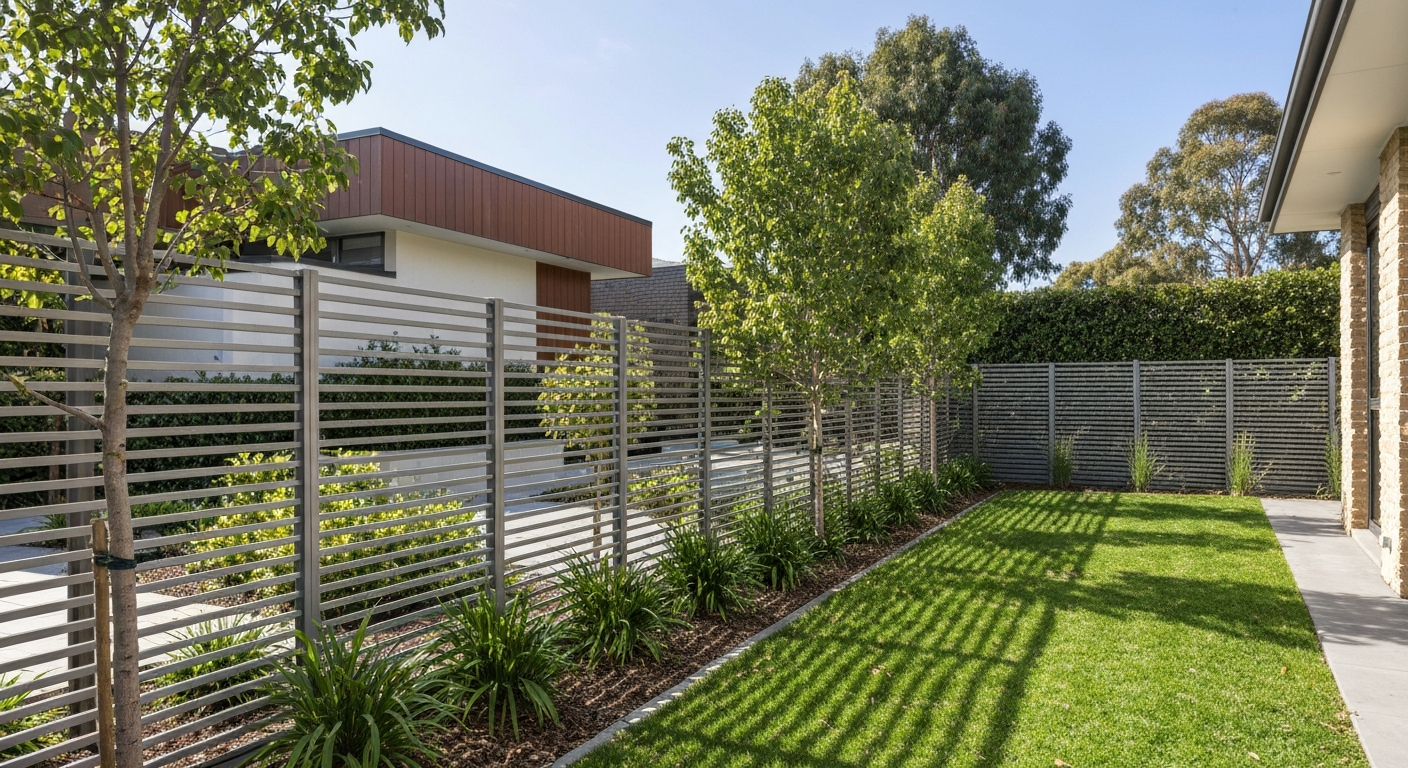
Wind-resistant fences usually rely upon regulated airflow. That can suggest pickets with spacing, latticework with smaller sized openings (set up correctly so it does not flap), or panels constructed with framework that prevents turning. The goal is to reduce pressure while maintaining side strength.
From a setup perspective, you can construct a strong fence that also breathes, but you have to get the geometry right. Gradually, fencings with excessive openness can rack due to the fact that the framework takes more load activity. Fences with too little visibility can act also rigid and capture wind. The most effective results come from the ideal equilibrium for the style.
If you are choosing between a strong personal privacy appearance and an extra open design, ask your Best Fence Company what they do on revealed lots. A great Best Fencing Installer can clarify how their common layout changes for windier lawns, rather than treating every fence line like it is the same.
Focus on messages: size, embedment, and placement control everything
People usually discuss boards, pickets, or panel surfaces, however wind resistance lives and dies at the blog posts. Messages are the supports for the whole system. If the blog post is as well little, established as well shallow, or permitted to relocate while the concrete cures, the fence can look penalty in the beginning and still fall short during the next gusty stretch.
Embed deepness is not guesswork
Embedment is influenced by soil problems, frost considerations in your region, and whether the installer uses concrete or another authorized technique. Also if you stay in a location with no frost, superficial setting can still bring about settlement, specifically in locations with sandy soils or frequent washout after storms.
For wind lots, deeper and well-consolidated grounds generally perform far better than very little shallow settings. What modifications by project is the specific depth and ground diameter, and a reliable Best Fencing Builder will either verify local requirements or layout for your dirt and exposure. If a person declines to discuss footing depth or concrete combination, that is a warning sign.
Post diameter and grade matter
Larger-diameter blog posts stand up to bending. Taller fencing lines and broader periods increase bending demand. The best fencing installers deal with the message size and the rail system as one signed up with structure.
Also take note of the product. Timber articles, specifically those that are not properly treated or are undersized, can twist under duplicated lateral tons. Steel articles can be exceptional if they are defined appropriately and set with suitable equipment. Composite or plastic can function, yet the architectural frame still needs to be rigid, and the add-on points require to be created for wind.
Alignment prevents stress
Wind does not only draw. It additionally compels fences to "hunt" for the course of the very least resistance. If messages are set with careless placement, rails will certainly take bending lots they were not indicated to deal with. Excellent installers utilize string lines, action offsets, and maintain whatever in airplane. This is one of those things that appears unseen till you see exactly how a fencing holds after a storm.
Span length and bracing options: where toughness is gained
The range in between articles (period length) is a significant motorist of how much a fencing can flex. Longer spans are a lot more prone since the rails and pickets act like a bar in between supports.
In subjected areas, the most reliable renovation is typically reducing span length or adding correct bracing. That can mean more messages along the run, or it can imply a supporting method at key points such as corners, ends, and gateway openings.
A fencing is not packed evenly the means many people think of. Wind gusts hit and afterwards rise, so the greatest tons typically appear at corners, fencing ends, and around entrances. If those areas are only lightly built, they come to be failing factors also if the straight runs look fine.
Gates should have the same severity as architectural walls
A gate is generally a moving structure. It adds vibrant lots during wind events, and hinges concentrate anxiety. Lots of fence failings begin with an entrance that persuades more than it should, after that transfers activity into the surrounding posts and rails.
Ask your Best Fencing Contractors or Best Fencing Companies what they provide for gate supporting in windy lawns. The best installers develop eviction to resist racking, make use of joint placement and equipment matched to weight and elevation, and align the gate so it does not scrub or droop under gusts.
Rail and fastener information: the "small" components that move big forces
Wind-resistant fencings are often built with durable rails and bolts that remain tight after temperature level swings. A fencing that squeaks and shifts as it heats up is a fence with joints that are losing tension.
Use the appropriate rail configuration
Many fences make use of one or two rails relying on the design and elevation. Taller fencings gain from more rail support. Larger picket spacing can require more powerful rail framework since the fencing face acts in a different way under load.
But rails are not nearly amount. Their positioning matters. If rails are mounted inconsistently, the load transfer becomes uneven. Installers who make the effort to keep constant rail heights and spacing typically wind up with fewer twisted panels and less message torque after storms.
Fasteners ought to be corrosion-resistant and properly driven
Fasteners are another place where real-world efficiency relies on details. In seaside or wet atmospheres, the corrosion resistance of screws, nails, and brackets impacts whether joints remain stable.
If an installer utilizes fasteners that are also little or does not seat them effectively, the wood can divide around the edges or the joint can loosen gradually. Over-driven screws can strip the timber. Under-driven screws can leave spaces. An excellent Best Fence Installer checks the fit as they go.
For vinyl, composite, and specific steel systems, hardware choice adjustments once again. Compatibility issues because different products expand and contract in different ways. Hardware that benefits one system can trigger stress and anxiety splitting or contorting in another.
Concrete curing time and workflow: do not hurry the structure
Wind-resistant fencings need time for their framework to support. Throughout treating, the article has to stagnate. If the installer backfills or dental braces poorly before the concrete collections, it can secure a minor lean. A fencing that is slightly out of plumb might look appropriate, but wind loads will intensify that tilt and twist.
From the area, the "rush" usually appears in 2 means: backfilling without appropriate supporting and working on adjacent periods that indirectly move the posts. The most expert staffs keep the process organized so each message is stable when it requires to be.
If you exist for installment, you can ask just how they support blog posts during setting and curing. The solution needs to seem intentional, not casual.
Wind-driven failure modes you can detect early
A fence does not always fail catastrophically. Usually it shows indication that show up if you know what to look for.
After a gusty occasion, I suggest doing a quick aesthetic check along the run. Search for:
- gaps that open at the bottom rail or in between pickets that did not exist before
- diagonal imbalance in between areas near corners or ends
- loosened equipment at rails, especially if you see corrosion stains or fresh movement
- gate sag or a latch that no more align cleanly
- posts that lean or appear to "turn" about bordering posts
If your Best Fencing Builder offers a warranty, you still wish to capture issues early. Taking care of a loosened up link quickly normally sets you back far less than re-building a run.
Soil and drain: the surprise variable in wind performance
Wind lots is only half the equation. The other half is what the ground does under side force.
Some dirts drain pipes well and offer strong assistance. Others can soften after heavy rainfall. If water pools near the fence line, the dirt can shed bearing toughness. That results in publish motion, which decreases overall fencing rigidity. Then the following wind occasion does more than press. It warps.
A solid installer represent drain patterns and dirt suppleness. They do not simply dig openings. They evaluate conditions as they dig, and they adapt footing dimension and embedment approach as necessary. If you are speaking with Best Fencing Installers, inquire about how they take care of damp or sandy ground.
You do not need to come to be a geotechnical designer to identify good judgment. An installer who is comfortable describing exactly how they address dirt variability is normally the one who will certainly do it correctly on your property.
Wind exposure upgrades: what "best" resembles in practice
When individuals say "finest," they commonly imply "overbuilt." Overbuilt can be costly, but the very best wind-resistant secure fencing upgrades are rarely about squandering product. They have to do with targeting the weak points.
The normal upgrades that matter most, specifically on subjected runs, consist of:
- shorter extends so the fence face can not rack as much
- increased blog post size or a much better blog post profile
- stronger supporting at corners, ends, and gateway zones
- reinforced rail framework matched to the fencing height
- hardware and fasteners made for corrosion resistance and lasting joint stability
A great Best Fencing Contractor will certainly suggest improvements based on your particular exposure, not based on what they always install.
Working with corners, ends, and obstructions
Wind likes shifts. A straight run has consistent loading. An edge or fencing end changes pressures. Trees, hedges, and frameworks transform air flow patterns. Driveways interrupt the line, and that disruption creates different pressures across nearby spans.
Installers who build for wind treat these locations as engineered points. An edge needs restraint so the fence does not "open" under gusts. Fence finishes require the very same concept since the end message becomes the anchor for the last bar arm.
Obstructions likewise develop constraints. If your fence needs to run around a maintaining wall surface, through a narrow lawn side, or near a slope, the ground and blog post embedment strategy may need adaptation. The most effective installers keep the structural continuity and stay clear of the temptation to spot weak points after the fact.
Picking materials for wind: timber, steel, and composite considerations
Material impacts both strength and maintenance. Wind resistance is not just toughness, it is long-term security under expansion, contraction, and weathering.
Wood fences can be excellent when effectively built with cured lumber, proper fastening, and constant period layout. The weak point appears when wood divides, rails loosen, or boards warp, creating racking chances. Correct hardware and good joinery decrease these issues.
Metal messages can add rigidity, particularly when they are specified and set appropriately. Yet steel requires compatible braces and appropriate corrosion protection. If you blend systems improperly, you can get loosening at the joints as a result of movement and corrosion.
Composite and plastic can look great, but they depend upon structure strength and right attaching details. Some systems are strong in straight runs yet can struggle at changes if supporting is not included. The "look" issues much less than the internal structure and exactly how the panels attach.
Whatever the material, the very best fencing installers deal with the fencing as a system, not a set of parts.
A sensible checklist for wind-resistant installation day
If you are collaborating with a Best Fence Company or any type of service provider, you can make use of an easy on-site list to capture issues without coming to be excessively technological. This is the type of checklist I wish every home owner obtained before signing.
- Confirm post spacing matches the design for wind direct exposure, particularly near corners and gates.
- Ask how messages are supported throughout setup and when concrete backfill is completed.
- Verify regular alignment making use of string lines or equal methods.
- Check fastener type and rust resistance for your environment.
- Inspect rail attachment points for tight joints and no visible gaps.
If the answers feel obscure, or if the team ignores these basics, you are taking a threat you will certainly spend for later.
Interviewing service providers: questions that divide "great" from "wonderful"
You can find lots of firms that will certainly build a fence. Less will certainly develop one that does via wind, rainfall, and seasonal movement.
If you intend to evaluate Best Fencing Installers, Best Fencing Builders, or Best Fence Contractors, ask questions that force specificity. The objective is to learn whether they think in lots courses and details, not simply aesthetics.
Here are the concerns that tend to reveal the fact quickly:
- How do you change article spacing and bracing for greater wind exposure?
- What is your technique for gateway bracing, hinge equipment, and alignment?
- What ground and embedment technique do you use for my soil and region?
- How do you guarantee posts remain plumb while concrete sets?
- What bolts and hardware do you utilize, and why those details choices?
You are not attempting to win an argument. You are attempting to see whether the installer's process is consistent and defensible.
A Best Fencing Company that has actually done many wind-exposed builds will typically have clear, repeatable responses. If the feedback seems like presuming, you can assume the construct will mirror that.
Maintenance after storms: maintain tiny concerns small
Even a durable wind-resistant fence can require attention. The secret is acting early. A fast upkeep routine can maintain small activity from developing into structural looseness.
After hefty tornados, specifically if you observe uncommon noise or changing, tighten up equipment where appropriate, change any type of damaged pickets or panels, and examine that gates swing freely without dragging. If you see an article that has moved, do not ignore it. Lateral movement is the seed of larger failures.
If you have a guarantee, follow the guarantee needs so you do not accidentally void insurance coverage by utilizing inappropriate substitute parts.
Common errors I see, and what I would certainly do instead
Wind performance is where shortcuts turn up. I have actually seen enough "almost excellent" fencings to acknowledge the patterns.
One mistake is utilizing the exact same span and supporting pattern for all backyards. An additional is avoiding supporting at edges and ends since they look "minor." Another is using bolts that are not right for the environment, which results in progressive helping to loosen. And one of one of the most pricey errors is hurrying concrete treating and permitting blog posts to relocate also a little while the setting changes.
The fix in each situation is different, however the principle is the same: match the fence design to the wind and construct with enough rigidity at the tons points.
A Best Fence Builder that is significant regarding wind resistance need to assist you stay clear of these issues before they take place, not clamber after the very first windy weekend.
Matching fence height to wind demands
Height is not simply appearance. Taller fencings have greater wind location, and the flexing forces enhance as the wind presses higher. A fence that is acceptable at 4 feet can behave in a different way at 6 feet or 7 feet, especially if the backyard is exposed.
If you are taking into consideration enhancing elevation, ask the installer what changes they will make to post spacing and rail structure. Wind-resistant styles often count on trade-offs: you might make use of shorter periods, include bracing, or choose a more wind-permeable design so the framework does not require to be ridiculously heavy.
The ideal installers clarify the trade-offs as opposed to merely upselling.
Final word you can use when comparing quotes
If you are comparing propositions from Best Fencing Contractors, Best Fencing Companies, Best Fence Contractors, and Best Fence Installers, do not contrast just line items like "number of panels" or "complete products." Compare the architectural plan. The quotes should reflect decisions regarding posts, embedment approach, span spacing, supporting strategy, equipment option, and how entrances are reinforced.
A fencing constructed for wind is rarely concerning one remarkable improvement. It is the sum of smaller right choices, made continually. When those options are right, the fence does what you want: it remains straight, remains protected, and maintains doing its work after the gusts pass.
If you inform me your fencing height, approximate run size, product you are taking into consideration, and whether your yard gets on a corner, near an area, or in an especially exposed location, I can recommend what information to especially ask each service provider so you can separate "looks strong" from "developed to stand up to wind."